Tuesday, October 23, 2007

Textual deferrance on the Vision

Vedanta talks of ' tat upanishat '. Here upanishat resolves into upa + ni + sat. 'Upa' is to be near. 'ni ' is before; 'sat' is to be. i.e. upanishat is to be in close proximity before or in front of. As a free adaptation we can say ' to be in close encounter with truth'. In the thought level we can say to approach truth is to do many levels of abstraction and attain the ultimate concept by removing the hiding layers of concreteness by the process of abstraction. When such a moment of conceptual realisation occurs, the Vedantins of the Forest-books always indicates such moments as ' this is upanishat'. We can say in other words that the concrete levels screened off the truth or the process of abstraction prepares the aspirant for 'seeing the truth'. This preparatory process consisted of ' hearing, thinking, meditating' -- sravana, manana, nidhidhyasanam --reading, studying, understanding and being totally involved in the concept.
The same epistemological formations were rolled into the concrete model of ' Archa ' , viz.,the temple. The physical screen delayed the vision and deferred the experience and in the mean time giving scope for reciting the canons. The text operates on the 'delay' and ' deference ' till the moment of ' vision' happens. Waiting for the vision is actually going thru the process of abstraction, which process is mapped out in the texts of the canon and hence going thru texts is expected to be of the rigor and value of the process of abstraction. Hence, the recitation of texts before the screen and before the vision. 'I know how to wait ' - so says the protagonist of the novel Siddhartha, by H.Hesse.' Be hungry, be alone, be awake ' so says the Tamil saint. Waiting is an art, not ofpatience, but of acceptance. To live with the creative tension of hope and possibility, and total acceptance of the given moment as an accomplished target calls for unique sensibilities of the soul. But only a poet knows how to loose the balance of mind during waiting, only to encash it as immortality of words.
Thirumangai Mannan, the robber-turned-saint of SriVaishnavism, in great hunger of the concrete visions of the Transcendent Divinity, explored all the templed spaces of theological fervor and in his go-around, he came to the place of Thiruvindalur. It was offtime for the vision, with the curtain postponing the DARSANAM--revelation. The saint became frustrated and in a shrugg-off he comments, ' Indalureerae ! vaazhndaepom neerae !! ' --' Thou Lord of the town Indalur ! Be like this foever rejoicing in thine own vision unto thyself [not giving me your Darsanam] '
Surely, it will not be for the reason that the temple gates are closed in the nonscheduled hours, that the saint is frustrated. But he is waiting in more than one level for the multiple visions of the abstract and his frustration is a way ofdilating the recessed meanings of the tension. The whole transaction of the saint is made unavailable to us not because of the opaqueness of the words, but because we may not enter the enclosure as we should. What we lack in the propriety and preparedness, we may make good by artful sharing of the words, which map out the tension and manipulate the vision.
This was an instance of a devotee already sharing by involvement the canonical space created by faith and textual attributions. To see another instance of a poet proper entering the hyper space of devotion in his own right as a man of poetry, and waiting at the threshold of vision and meeting a like situation of deferred DARSANAM,
' Open the gate, thou gate keeper !God of the wheel and Lord of the oceancommitted ourselves to Him, by devotion,dipping in births daring ports at last , at the edge of time, before the turn around before the towering bell turns the clockwe have entered the portals rich, And open the gates longlive. '[aazhi iraivarkkae aatpattu yaam palkaal paazhir piravi patindhu thurai pukunthu, oozhikkadai naalin ongu mani vaayililae vaazhi ivann adaindhom, vaayiloi ! thaall thirravaai]---tr. of a verse of Thiruloka Seethaaram.
Here the poet awaits confirmation rather than the vision. For him, the vision has been already vouchsafed by the poetic perception of the plural possibilties of the word and the world in tandem. Here he is trying to attain the abstract certainty of the poetically epistemical ' visions' he lodged at the outset.

Some musings on the sonnets of Shakespeare

I was translating some sonnets of Shakespeare into Tamil. I was wondering why the bard thought it so important to advice a young man like me to marry without fail and to impress on the mind of the lad the sanctity of wedding and begetting. Was it perhaps to himself? Was it a soliloquy? Naturally talking about marriage engenders considerations of immortality and furtherance of life which otherwise ends with the individual. People have speculated long about the dark lady, the young man, even a Lord and what not. But why a poet like Shakespeare should dilate so much on a predominantly prevalent theme like marriage for a total length of say 156 or 154 sonnets? I am trying to read in between lines and attempting various interpretations but the persistant mystery seems to be evading.
'Unthrifty loveliness, why dost thou spendUpon thyself thy beauty's legacy?Nature's bequest gives nothing but doth lend,And being frank she lends to those are free.Then, beauteous niggard, why dost thou abuseThe bounteous largess given thee to give?Profitless usurer, why dost thou useSo great a sum of sums, yet canst not live?For having traffic with thyself alone,Thou of thyself thy sweet self dost deceive.Then how, when nature calls thee to be gone,What acceptable audit canst thou leave?Thy unused beauty must be tomb'd with thee,Which, used, lives th' executor to be'
Was it death or progeny or pragmatic sensibilty which prompted W.S. or none of these but something else? I am having my mind open to any chance hints or insights from the poem or anywherelse.

FIRE, the early love of Man

Fire, the old friend of man, is even now fresh and interesting to look at. Manifold forms of energy have not made this raw guest in any way less wonderful. But what was his reception in the days of old when darkness, dampness and dangers from the wild were making his absence acutely felt. He was a God once ! Now may be a utility. Who can access those primordial times and see his world, where men and cattle worshipped him devoutly? If at all we can do that, I think it should be through Rig Veda, the oldest log of subjective reactions to the outside world and the symbolising initiatives toward the abstractions. This god Fire, or Agni as he was called in Rig Vedic times enjoyed not only worship but also teasing and humour at the hands of the devotees.
In R.V.10.79 he is portrayed as a magnificient immortal making visible his might among the mortals. Do you know his might? With a touch of humour the poet says, "he is of two jaws rent asunder, devouring everything in without masticating anything". A glutton impatient even to chew!
His head is in a cavern safely sheltered off. His eyes are wide, viewing all. His tongue gulps in even a forest without chewing. So naturally the worshipper is doubly careful! He stands at a safe distance and raises his two hands up away from the touch of his tongues and offers oblations.
Not only that. He is born of the mother earth. But how he ravages her creeping over her as a child and swallowing trees and even licking out the hidden roots in her crevices.
He was made from the two logs of wood churned to friction. Once he is born, the Fire devours the parents! The poet makes a dig at Fire saying "see! I am so devoted to my parents and respect them. And I am only a mortal. But this one, he devours his parents immediately when he is born and He is called Immortal!"
The poet asks this god, "what wrong, what sin you have committed among the gods, that you are let down like this on the earth here to hunt for your food over dale and vale?"
The symbolisation and the subjective interaction with a primordial natural element being so much suffused with bristling humour speaks of that age in a modern tone and makes credible the possibility of not only fear and mystery, but also humour and certainty and subjective gregariousness with the greater questions of life being the initial conditions of theology.

Saturday, July 08, 2006

Translating the divine girl

karuviLai oNmalarkAL ! kAyA malarkAL !
thirumAl uruvoLi kAttukinRIr,
enakku uyvazhakku onRuraiIr
thiruviLaiyAtu thiNtOL thirumAliruchOlai nambi
varivaLai ilpukunthu vanthipaRRum vazhakkuLathE !
(nAchchiyAr thirumozhi 9.3)

Lovely blossoms of karuviLai !
Flowers of kAyA !
You are showing me the complexion
Of ThirumAl's shining form.
Tell me a way to survive.
The great Lord, full and complete, of ThirumAlirunchOlai
Whose shoulders strong are the playful prop
Of the goddess of wealth, Thiru.
Is it just for him to enter our house
And snatch my lovely lined bangles by force?

When I read this to a friend, his ready comment was, 'it's too literal, do something about it !'. What is too literal and what is in proper idiom changes with the language.
Here, 'showing me the complexion of thirumAl's shining form' tries to translate the original, 'thirumAl uruvoLi kAttukinRIr'. The flowers kAyA and karuviLai, left untranslated with cognate names in English are addressed by the implied speaker as resembling thirumAl in complexion by means of their color and shine.

'ThirumAlirunchOlai nambi' of the original indicates the deity in the temple of the place, ThirumAlirunchOlai. The word 'nambi' means 'one who is full of good qualities,
accomplishments and exceedingly noble'. This word 'nambi' plays a vital role in suggesting a subtle humour to the poem. But the translation is yet to catch that humour.

'whose shoulders strong are the playful prop of the goddess of wealth, thiru' by being overly literal goes too awry from the passing of the proper mood and sense of the original, 'thiruviLaiyAdu thiNdOL'.

What is 'snatching one's bangles by force' as per the target idiom of English?

So the target language changes the poem and the translation, if successful, is but a deception. But this deception has to be made efficient in communicating the original, however. Shall we attempt at a deception now?

karuviLai ! kAyA !
Oh! you flowers and blossoms
of shine and color !
Form of ThirumAl you resemble,
Can you suggest me a way to survive?
The God of ThirumAlirunchOlai,
so noble is He and so strong-shouldered,
Thiru, the goddess of riches, ever rejoices in Him.
Is it right on His part to force His way into our home
And snatch everything, including the bangles on my wrist?

Saturday, June 17, 2006

Victor Hugo

It is just amazing what an appeal the French giant is able to make even now. Of course many criticisms have been levelled against Hugo to the effect that the writer is sometimes inordinately eloquent and the interludes become books by themselves so that the reader is left at largesses to manoeuver his way back to the link in the story. But, for myself, I found these interludes very interesting. And moreover as a man of India, southern Tamilnad, in Srirangam I had already been exposed to the epical styles in Ramayana and Mahabharatha and as a result Hugo found his peers in my reception of reading. More so, I think he was writing about the universal men in his characters, which justified perhaps the wide strokes he tended to make quite often. But how can he remain so gripping in his story telling, all the while so abstract in his philosophical observations. A good story telling means being attentive to the particulars and to match this with intense abstractions running to pages and more than that, altering between these two quite often. No wonder I call him a giant.

After I joined my job, the first thing I did was to buy a copy of Penguin Les Miserables and take that to Neyveli where my father was staying at that time and to read out to him pages after pages of cherished text-places. A transport of interests between father and son! Especially I remember the first scene where the priest goes into the woods to meet the renegade, dying of old age but still a terror in the quarters. One thing I found in Victor Hugo was in his novels the arguments and dialogues do act and do act right before your very eyes. I have found this talent in rare instances, may be a couple of them, right now the one other novelist coming to mind is Ayn Rand.
Another feature of Hugovian novels is the choice and the volitional thrust of decisions, which the characters make. The articulations of the deciding process are phenomenal.

Friday, May 05, 2006

Poetry

The world has become too strange to poetry.
Poetry has to blossom in the person and become contagious.
Poetry can never become prose or its substitute
Infirmity in poetical perception covertly touts prose in its place
Poetry always happens
taking inputs from unforeseeable quarters
Poetry is creative irregularity
madness of connotation
A conflagration of words and meanings
Never a guided tour
Being a venture into unchartered regions

Saturday, January 07, 2006

VENU AND THIRULOKA SITHARAM


It was a day of Naachiyaar Thiruk kolam* in Srirangam. It was the later part of 1970s. The Tamil poet, Thiruloka Seethaaram and other friends visited my father, nearing dusk. When refreshments were over, talks wandered here and there; topics were changing and discussions cropped up to dissolve in further musings. My father was ever a terrible conversationalist and table talks were always lively whenever he was around. Slowly the drift was towards Shakespeare. My father commented that without the help of commentators like Bradley and others, it was always difficult to understand the Bard and hence the perennial value of annotations on Shakespeare. 

 Thiruloka Seethaaram, a man of original thinking and independent development, sprang on the moment and countered my father saying, " how can you say that ? has the poet written directly for you or for any mediator to expound to others ? what are these commentators? throw them ! go to the poet directly ! labour pains and poetic strains can never be had by proxy." 

My father was a man never yielding to a point in arguments. Nothing was sacrosanct and nobody towered high when he began to charge with his battery of arguments. He immediately countered back the Poet saying, " all such arguments are ok with regard to geniuses like yourself. But what of the common run and less endowed like us who need some prompting at least". 

Immediately the piece of soliloquy in Hamlet, ‘to be or not to be’, was taken as a test piece and analyzed . After some time other friends who were there were already feeling a little sleepy and assumed all sorts of resting postures. But the two concerned were not aware of the passing time, it was already 11 pm, and with recurrent renewal of energy they were going on and on. Thiruloka Seethaaram was arguing that all commentaries were a waste standing in between the text and the reader. The text can and should speak for and by itself, that Prof. C S Kamalapathi, who was my father’s friend and guide in dramas had exploited the emotional involvement of my father and injected such slavish dependency on the commentators. ( I was wondering how my father would retort to that) But my father took it in his strides and replied , “ not so ..the said Professor out of sympathy for the students that they need not unnecessarily waste time on already clarified aspects has brought to the knowledge of us such foregone efforts, and thereby we can start from others’ endpoints. It is the natural way of growth, to learn, to accumulate lessons learnt and pass it on to the coming generations. Where the forerunners stumbled that is the light for the later to better. The ways of the exceptional cases like the poet do but stress the natural process and never disprove it. 

At last it was half an hour past midnight and the two came to a halt of mutual appreciation , accepting to disagree . I remember it vividly even now as a battle of giants. 
Srirangam Mohanarangan

  *Nachiyar Thirukkolam --In Srirangam temple during the month of November-December a festival of recitation of the whole corpous of 4000 divine hymns of Alwars is conducted for the past 1500 years. In the middle of the 21 days long festival comes Vaikunta Ekadasi, on which day the Deity himself act out the role of a religious aspirant towards salvation. The day previous to that , the Deity adorns himself as the goddess consort, Nachiyaar( the Lady of the divine household). It is called Nachiyar Thirukkolam- in the Guise of the Lady. 

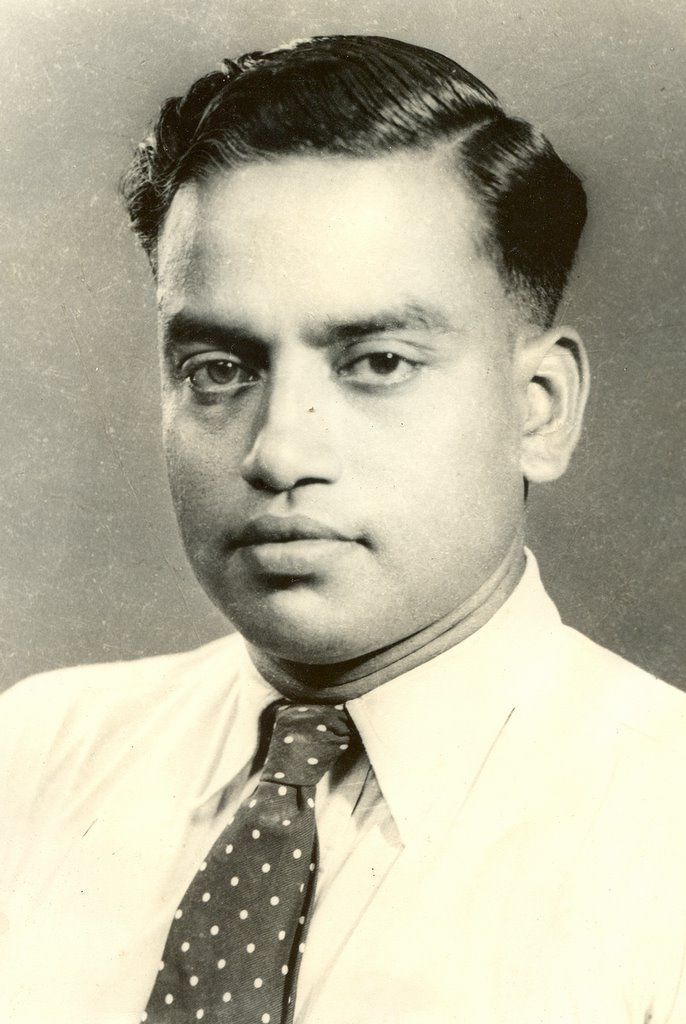
*my father-R.Venugopal

Friday, December 30, 2005

VENU, THE MARVEL


Drama was the extrovert front of Venu’s talents. His introvert mode of aesthetic realization was with poetry in the form of say, reading closely Kamba Ramayanam with the exegetical interpretations of Sri Vai.Mu.Ko swamy . I still remember the nascent glee when he bought the Sundara Kandam, Kamba Ramayanam with VMG’s urai in the Nambillai sannidhi in the south gate Srirangam. ‘Aandakai aandu av vinnnor Thurakka naadu arukil kandaan’—‘the manly one then beheld there the yonder world of heaven celestials well nigh to his watchful gaze’ so began the SK and there began my coaching in expounding Kamban on stage. Twenty hymns with the VMG’s explanations were targeted to my memory to be recited and narrated at any time on demand. A following Sunday found us in Dr. Vas’ stores in Thennur in the house of Sami Periyappa (eldest of my father and his brothers) I still hear the baritonical gurgling laugh which greeted me at the threshold. After a hot coffee I was commissioned to do an extempore exposition of Kamban - in- memory . Dr. Vas was jubilant and immediately commissioned all the inmates of the stores. There were ‘aahaas’ and ‘see this small boy’ in liberal measure. 

The forum informal then reminiscenced about the days when my father was one of the inmates when he was a bachelor. There were lots of stories for the picking. For instance, there was the story about one Brhamma Kabaal swamigal, a mendicant noted for his coin-toss gimmicks. The swami used to keep some rupees exchanged into brand mint coins and by a sleet of hand used to toss coins on the prostrating devotees giving them to believe that he had nothing to do with such divine signals. Venu was the ‘sando’(boxer) in the complex and sometimes argued a point with his hands when persuasions were pooh-poohed. So people brought now and then domestic cases to his panchayat. His judgements, decisions, leads and tackles were always appreciated by Dr Vas and others. The swami , perhaps fearing Venu, used to placate him by saying that Venu had shed off 10 of his births by showing respects to him, whereas Rajappa , of the Dr.’s household increased 10 more by his disrespect towards him. Dr Vas was a religious man and firmly believed in saluting the ochre robe wherever and whenever seen. Somehow the swami went away and nothing more was heard of him. 

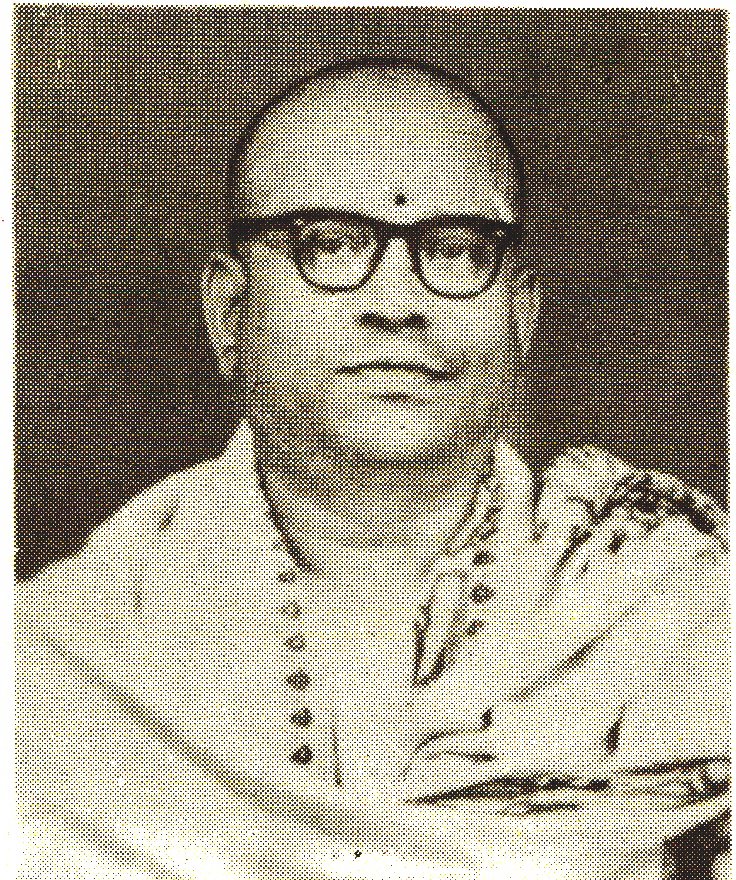
Then there was the story of waiting for the Mahatma. Venu took the boy Ramakrishnan to see Gandhi. Dr Ramakrishnan still narrates with the nascent relish, the story of the waiting. My father was an ardent admirer and associate of Prof. C.S.Kamalapathi (seen in the right) and together they founded SHAKESPEARE HEAD PLAYERS and staged more than a dozen dramas of the Thespic Angel of the Avon, Shakespeare. Those were simple days and people were simple. The thatched roofs and the rustic porticos invited the people in , induced the people to go out, mingle among themselves and meet the strangers. The raised up vertical streets nowadays cleave even a single man into his sleeping part and waking part. He is now in the predicament of meeting himself first before beginning to come out. 

The present generations have not done their homework. The integration of the past , the interpretation of the present, and the intuitive construction of the future is an important task but sadly neglected. Heaping the blame on the modern way of life is one excuse. The modern life has its own virtues, say, better living conditions and more and more people realising their dreams. What we do with this material prosperity is solely dependent on a rare thing to be attained viz., Wisdom. It was available with people in those days, now become a rare commodity.
Srirangam Mohanarangan 

***

Sunday, December 11, 2005

A POET'S WAY OF CRITICISING ANOTHER POET


I was reading the UttaRarama Charitham by Bhavaboothi. I find him so adept in portraying the poignant moods of characters. The time he has chosen is also apt. The later part of SriRama's life, given to much recapitulation and nostalgia, provides a suitable thematic space for Bhavaboothi( Ist quarter of 8th cent.- Dr. Bhandarkar).
There are some stories which speak of the connection between Kalidasa and Bhavaboothi, though not historically valid but show the veins of criticism, registered by the succeeding generations of readers. One such story is interesting. After finishing the URC , Bhavaboothi wanted to have an opinion of the master-poet, Kalidasa. So he approached him and found him playing the chaturanga, a form of chess. After hearing him thru, Kalidasa wanted to give a hint for bettering the text in one place. Perhaps he didn't want to do it openly, for the reason that Bhavaboothi may be estimated low in the eyes of the beholders, but all the while the hint should reach the literateur. So what he did you know, he took some chewing leaves and pasting it on the back with the edible lime, he commented that சுண்ணம்(calcium) is a bit excess. The onlookers thought that Kalidasa was commenting about the pan leaves and the lime paste overleaf. But the message reached Bhavaboothi and made him thankful. Let us see about that.
In the first anka of the play URC, 27th verse reads
kimapi kimapi mandam mandamAsakti yogAt
aviralita kapOlam jalpatOrakramENa
asitila parirambha vyApruta ekaikadOshNo:
avidita gatayAmA rAtrirEva vyaramsIt
we were mumbling in whispers soft, random
in deep love entangled, cheek to cheek
lying close, one in another's arms embraced
night alone was over
with its watches passing by.( translation mine)
In the line 'night alone was over', by adding one anusvara, m, in the original rathrirEva becomes rathrirEvam, meaning 'night was over thus'. Eva in sanskrit means 'only', 'alone'. Evam means 'thus', 'in this manner'. Bhavaboothi originally while reading out to Kalidasa wrote only 'Evam'. In the verse it meant that the lovers SriRama and Sita were calling back to memory the bygone days in the forests and on one such occasion of intimacy the night time passed by in the manner described. Deascribing like this is not remarkable for a distinguished poet. So Kalidasa suggested that the letter m is an excess in the word 'Evam', removing it 'Eva' will be more natural, aesthetic and apt. How? In intimacy, it is but natural for the lovers to be unmindful of the passing time, even at the end of night.
So to say that night time only passed by leaving us still in whispers will be more aesthetic. In sanskrit this m is written at the top of the letter as a dot, which is called anusvara. So when Kalidasa, in his gentle way pasting the lime over the back of the pan-leaf and said one atom of lime was in excess, Bhavaboothi understood that he meant an anusvara, occurring in some descriptions. And finding out the anusvara in Evam was a child's play.
***

Friday, November 04, 2005

BURNER'S FANTASY

The milkpot sits docile on the burner
Stickey drops of water
Trickle down the sides
To the bottom on the flames.
The burner's flaming tongues
Raise resenting hiss' and tchas;
Knowing fully well
The anti-stance mutual
Why the watery drops
Should touch the flames in bad spots
Or perhaps.. a wooing
For a silent shimmer of intercoursing heat.

Monday, October 31, 2005

BIRTHDAY OF FIRE

Human beings shivering in rains, shrunk in cold, scorched in summer and eating food raw and unbaked was the picture till the advent of fire and light. Light ofcourse they had thru the sun in the sky, but it was not mostly light, the friend but often some phenomena from the above beyond one's purpose. Heat almost they had none except the sun's heat. What would they have thought of the sun as the source of light and heat? Did they have concepts of light and heat as seperate? Without fire in the life of mankind, would any form of civilisation have been possible? Cold and darkness seem such domiciled creatures now; but not so in the pre-fire ages of mankind. Food was raw, tools were rough, climate a dictator colluding with the wild- the picture is already bleak. There was only a spark in the brain pulling him thru all the untowardness in the surroundings--the spark of cognition, the spark of thinking, the spark of understanding.
Somehow fire came to man or man learnt to make fire. Many mythologies cherish some story or another about the fire's coming to mankind. The whole Rig Veda seems a mystical register of the biography of fire, the Agni. Prometheus brings fire from Heaven and incurs the wrath of Zeus.

Fire the external spark in the outside world enhanced the human life in innumerable ways. Civilisation and culture were but consequences; religion became a possibility;
story-telling was born, technology sharpened--man could taste what was freedom.
All because this ancient seer- agni, FIRE came to reside among men as the messenger between men and gods, as the bridge between the past and the future.
Some day should have been the birthday of this most important guest of mankind,
the strong friend, the sagacious guide and the sublime philosopher of physical
inspiration. Maybe Deepavali is one such day, the birthday of light, the birthday of
heat, the day of advent of the FIRE. Let us wish him a happy birthday !!

SRI KRISHNA

A stray arrow from the wilderness
To an illusive target
Of an untrodding foot
Could prove the finale
Of a narrative begun
Before the beginning of the sun
And moving on and on, way beyond
Even after the earth has come to an end
Bearing the holocaust on its honed tip
To the nested peace of the pained bliss;
Perhaps the arrow,
The self-same one
Rent by the hunter
Into the bird and bard of poesy
Bereavement cursed breaking the word
Into flesh of sounds
And breathing the meaning into the forest of the soul.

Wednesday, September 21, 2005

VENU IN THE ROLE OF ASVATTAAMAN


This is the picture of the actors in the sanskrit play
'Asvatthama' staged in Trichy way back during 1950s !! You can see my father, the indomitable VENU, in the role of Asvatthama--standing, Ist row, right extreme. The sacred thread is conspicuous. It has a bearing on the character-on-stage. My father used to say that he was able to bring full force into the acting by taking the proverbial oath of Asvatthama stretching the thread taut by the left hand while gesturing the oath by the right.(Asvatthama is the son of Drona, the brahmin teacher of military arts to Pandavas and Kauravas in the story of Mahabharatha. When Drona was becoming invincible in the war-field he was downed by a trickery of words. By the by, the great epic is available in English translations. In Tamil, the entire epic inclusive was brought out after 20 odd years of effort in 1930s and 1940s by the great M V Ramanujachariar swamy thru his Mahabharatham press in Kumbakonam. After 1955 it was long out of print for nearly 50 years. Luckily, now,it is being brought out in 9 tomes, already 4tomes are out, by one Venkataraman, my friend) You should have seen my father acting out various characters even while reading out. A genius and a genuine thespian was lost by Tamilnad unawares. 
Srirangam Mohanarangan 

***